
All Song Michael Jackson Piano
Sgpt TechMusic
3.822.00 Reviews
- Version
- 4.1
- Installs
- 100.00K
- Age Rating
- Everyone
Screenshots
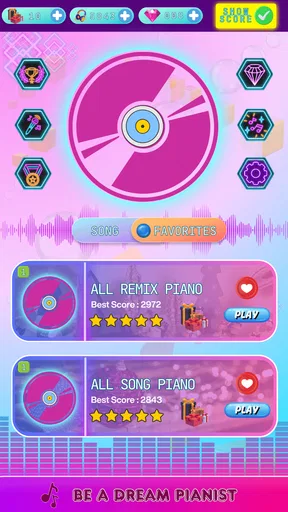
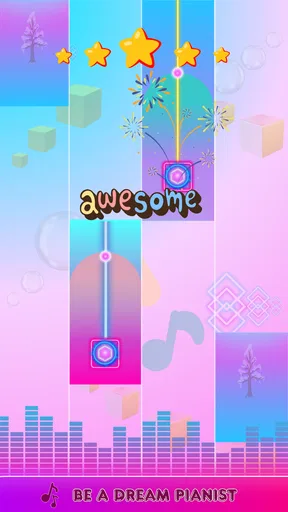
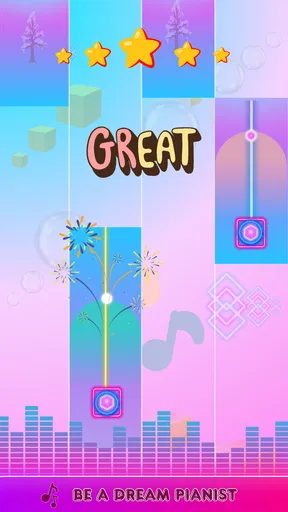
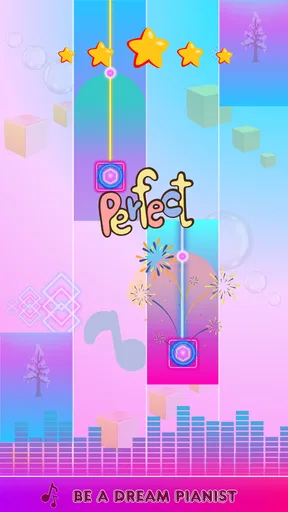
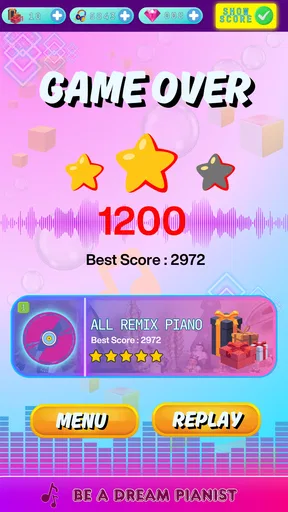
Our Review of All Song Michael Jackson Piano
 Analysis by Appyee
I found All Song Michael Jackson Piano most useful as a quick, casual music game for a shared phone or tablet. It takes the familiar idea of tapping piano tiles and places it around Michael Jackson songs, so the appeal is immediate: you do not need to learn a complicated interface before playing. I could hand it to someone who enjoys his music, let them try a few rounds, and understand the basic attraction within minutes.
That simplicity is also the central limitation. This is not a full piano-learning course, a music player, or a replacement for a rhythm game with deep progression. It is a lightweight way to react to notes, test your timing, and spend a short break with recognizable material. If you approach it with that expectation, the experience makes much more sense.
How it works in a shared household
In my experience, the game fits a shared-device situation better than an account-heavy app would. One person can play for a while, pass the device to someone else, and let the next player start their own attempt. That makes it suitable for a quiet family challenge, a quick turn during a journey, or a music-themed activity when several people are using the same screen.
The important thing is to treat the device as the boundary between players. I would not assume that separate profiles, personal histories, or family-specific progress are available. If two people use the same installation, they should agree on how they will handle scores and progress rather than expecting the game to divide everything automatically.
A practical routine is simple: one player chooses a song, plays until the round ends, and then gives the device to the next person. Keeping turns short prevents the strongest player from taking over and makes the game feel more social. Younger players can also watch the pattern before trying, which turns waiting time into a useful introduction instead of dead time.
For a household that wants a shared music activity, the Michael Jackson theme gives the game a clearer identity than an anonymous piano-tile app. It can start a conversation about favorite songs or encourage someone who already enjoys the artist to try a timing game. Still, the music theme does not automatically make it educational. I would describe it as a listening-and-reaction game, not a lesson in reading music or playing a real keyboard.
What the first session feels like
The opening experience is approachable because the basic goal is easy to understand: follow the notes on screen and keep your timing under control. I did not need a long explanation to begin. That matters on a shared device, where people may be unwilling to read instructions before taking a turn.
My advice is to begin with a short session rather than trying to master everything immediately. The first attempt is useful for checking how quickly the notes arrive, how sensitive the touch response feels, and whether the player prefers holding the device vertically or horizontally. Those small preferences can make a noticeable difference in a timing game, especially on a compact phone.
Do not judge your ability from one failed attempt. Rhythm games often feel awkward until your eyes stop following individual tiles and begin anticipating the next movement. I found it more helpful to watch the lane as a whole and keep my finger relaxed. Tapping too forcefully or staring only at the lowest part of the screen makes the sequence harder to read.
Setting expectations before handing over the device
When several people share one phone or tablet, a little coordination avoids most frustration. I would explain that the game is free and intended for everyone, but I would still supervise younger children during the first session. The age label makes it broadly accessible, yet an all-ages rating does not tell a parent how a particular child will respond to repeated failure, fast movement, or a competitive turn.
I would also make clear that the game should not be treated as a private musical workspace. If a child wants to practice piano technique, this is the wrong tool. It can help with attention and hand-eye timing, but tapping on a screen does not teach finger placement, posture, scales, chords, or how to interpret sheet music.
For adults sharing a device with children, the safest arrangement is a visible, agreed turn-taking routine. Decide who plays first, how long a turn lasts, and whether the group cares about the highest result. This is not a feature claim about the game; it is simply the household habit that makes a single-screen activity fairer when personal accounts and individual boundaries are not part of the experience.
Music focus, timing, and everyday usefulness
The strongest reason to try this title is its narrow musical identity. Michael Jackson fans may find the theme more inviting than a generic piano game because the songs provide a familiar emotional hook. Even if you are not aiming for a high result, recognizing the musical style can make repeated attempts feel less empty than tapping through unrelated tunes.
That focus also creates a clear audience boundary. Someone looking for a broad catalog across many artists may prefer a more expansive rhythm game. Someone who wants realistic piano control should choose a keyboard simulator or a structured learning app instead. I would pick this one when the combination of a famous pop artist and simple touch timing matters more than variety or technical depth.
One useful way to play is to separate listening from competition. On the first attempt, concentrate on the rhythm and visual pattern. On the next, try to improve consistency rather than simply going faster. This approach makes the game less discouraging for a beginner and gives an experienced player a more deliberate challenge. It also works well when a parent or friend is helping someone learn the controls.
Another practical tip is to use it as a short reset between tasks rather than as an endless activity. A few rounds can provide a change of pace after studying or during a break, while longer sessions may expose the limited depth more quickly. Once the novelty of the songs and tapping pattern fades, players who need a larger progression system may begin looking elsewhere.
Who will enjoy it most
I would recommend it to casual players who already like Michael Jackson, people who enjoy timing-based touch games, and households wanting an easy activity that can be passed around. It is also a reasonable first rhythm game for someone who feels intimidated by complicated menus, multiple control schemes, or demanding tutorials.
It is less suitable for a musician seeking practice that transfers directly to an instrument. It is also a weak choice for someone who expects a full music library, detailed customization, or a long-term competitive system. Those expectations belong to different kinds of apps, and choosing this game for them would likely lead to disappointment.
The game’s free price makes experimentation easy. I can see the value in installing it for a shared event or letting a music fan test it without committing money. Free does not mean it will suit every player, though. The real question is whether the focused theme and simple tapping loop are enough to hold your attention after the first few sessions.
Device sharing, boundaries, and coordination
On a household tablet, I would place the game in a shared entertainment area rather than on a child’s personal device without discussion. That is not because the game is unsuitable for children; it carries an Everyone content rating. The point is that shared entertainment works best when adults know who is using the device, when turns end, and whether the next player is allowed to change the current session.
If several family members care about results, record them outside the game with a simple note. That workaround is useful when players want a household leaderboard but do not want to argue over whose attempt is currently displayed. It also keeps competition friendly: a player can focus on beating their own previous result rather than treating every turn as a contest.
For siblings or friends, I would avoid giving the device to the fastest player for too long. A rhythm game can become frustrating when one person already understands the timing and another is still learning the visual flow. A better arrangement is to let the beginner try first, then allow the experienced player to demonstrate one round without turning the demonstration into a performance that feels impossible to match.
Adults may also want to agree on volume before a shared session. Music is the reason to play, but the same soundtrack can become distracting in a quiet room, especially when several people repeat a difficult section. Using the device at a comfortable level and taking breaks keeps the game from becoming a source of household friction.
Age context and trust
The Everyone rating makes the game easy to consider for a broad age range, but I would still judge suitability by the individual player. A child who enjoys music and short challenges may respond well. A child who becomes upset by missed notes or wants a clear learning outcome may need an adult nearby to frame the experience as play rather than practice.
Trust matters more on a shared device than the rating alone suggests. I would show a younger player how to exit the game, how to pass the device safely, and which parts of the screen they should avoid touching if another person’s session is active. These are ordinary household rules, but they prevent accidental interruptions and make the game feel more respectful when several people use the same hardware.
I would not present the game as a substitute for supervised music education. Its value is in playful timing, recognition, and quick interaction. If a child becomes genuinely interested in piano after playing, that is a good moment to move toward an actual keyboard, a teacher, or a lesson-focused app. The game can be a spark of interest, but it should not carry the responsibility of teaching an instrument.
Performance, maturity, and practical fit
The title comes from Sgpt Tech and is available free of charge. It was released on December 21, 2021, and the current version is 4.1, with Android support beginning at version 5.0. Those details make it accessible to people using older Android hardware, which is useful in a household where the shared device is not the newest phone.
Its reach is respectable for a niche music game, with over one hundred thousand installs. The average rating is 3.8 from roughly five hundred ratings, while the listing contains a little over twenty written reviews. I read that combination as a reason to keep expectations measured: enough people have tried it to show real interest, but the rating does not suggest a universally polished experience.
That middle-ground reception matches my overall impression. The concept is easy to understand and the artist focus gives it personality, but a simple rhythm loop has a limited ceiling. If the touch response, song presentation, or pacing does not match your preference, there may not be enough depth to compensate. The game succeeds when its central idea is exactly what you want, not because it offers a huge range of systems.
On older Android devices, I would close unnecessary apps before playing and keep the screen clean. Timing games are sensitive to distractions, and a crowded display or a device being used by several people can make mistakes feel like gameplay problems. I would also give the device a brief test before a group session, since passing around a phone is the worst time to discover that someone cannot comfortably see the notes.
How it compares with familiar alternatives
Compared with a standard piano-learning app, this game is faster to start and much lighter in commitment. You can tap into a round without arranging a lesson or understanding musical notation. The trade-off is that the skills remain mostly inside the game: better timing on the screen does not equal better technique on a physical piano.
Compared with a general rhythm game, its Michael Jackson theme is more specific and potentially more memorable. A broader rhythm title may offer more variety, more complex progression, or a wider selection of musical styles. I would choose this one when the artist is the main attraction and a compact experience is preferable to a large content library.
Compared with simply listening to Michael Jackson songs, the game adds participation but removes some of the freedom of passive listening. It asks you to watch and react, so it is better for an active break than for relaxing with music in the background. If your goal is to enjoy the recordings themselves, a regular music app is the more natural choice.
Compared with a real keyboard, there is no substitute for physical feedback. A screen can make a player feel involved, but it does not develop the same coordination as pressing weighted or unweighted keys. I would use the game to introduce a child or fan to a playful music interaction, then switch tools when the goal becomes genuine piano development.
Small habits that improve the experience
First, play with a clean screen and stable grip. A smudged display or an awkward hand position can make taps less reliable, and in a shared household the device may have been handled by several people before your turn. Wiping the screen and settling the device on a table can make the session feel more controlled without changing the game itself.
Second, use the first round as calibration for your attention, not as a final judgment. Notice whether you lose focus when watching one lane, whether you rush after a missed note, and whether your hand blocks part of the display. Once you know the problem, adjust your posture or viewing angle instead of tapping harder.
Third, give beginners a non-competitive goal. Ask them to complete a short sequence, keep a steady rhythm, or improve one attempt. This is especially helpful with children and shared devices because a household leaderboard can motivate one player while discouraging another. The game becomes more welcoming when success is not defined only by the best performer.
Finally, stop while the central idea is still enjoyable. Repeating the same kind of challenge can be satisfying for a dedicated rhythm player, but casual users may get more value from several brief sessions spread across the week. That pattern also makes it easier for different household members to share the device without one person monopolizing it.
My household verdict
I see All Song Michael Jackson Piano as a focused, accessible music game rather than a serious piano tool. Its free entry, Everyone rating, older Android compatibility, and recognizable artist theme make it easy to try on a shared device. I especially like it for short turns between family members, provided everyone understands that the game offers a simple timing experience instead of personal accounts, formal lessons, or deep musical training.
I would recommend it to a Michael Jackson fan who wants an interactive break, a casual player looking for uncomplicated tapping, or a household that needs a small activity several people can enjoy in turn. I would skip it in favor of a learning app, a broader rhythm game, or a music player when those are the actual goals.
My final advice is to install it with modest expectations and test it in the setting where you plan to use it. Let one person try a round, agree on how the device will be shared, and see whether the song theme keeps everyone interested after the novelty fades. If it does, this compact game can earn a place in a family entertainment folder. If it does not, its focused design makes the reason clear: it was built for quick piano-style tapping around one artist, and that narrow purpose will either feel pleasantly direct or too limited for your taste.
Verdict
Strengths of All Song Michael Jackson Piano
- Simple piano gameplay suitable for casual Michael Jackson fans.
- Songs are easy to start, even for players with no musical experience.
- Touch controls feel responsive on most modern phones.
- Short sessions make it convenient for quick entertainment.
- Familiar melodies can make practice feel more engaging.
Limitations of All Song Michael Jackson Piano
- Song selection may feel limited for longtime Michael Jackson fans.
- Gameplay can become repetitive after extended sessions.
- Some features may require an internet connection to work properly.
- Ad interruptions can affect the flow between songs.
- Performance may vary on older or less powerful devices.
Similar Picks in This Category
View All
Tiles Hop Music & Ball Game
AMANOTES PTE. LTD.4.3

Magic Tiles 3™ - Piano Game
AMANOTES PTE. LTD.4.6

Real Piano
Bilkon3.7

Piano Game: Classic Music Song
Dream Tiles Piano Game Studio4.0

Smash Colors: Music Ball Rush
BADSNOWBALL HONGKONG LIMITED4.2

Piano Music Go-EDM Piano Games
Joy Journey Music Games4.5
Frequently Asked Questions
What is All Song Michael Jackson Piano?
All Song Michael Jackson Piano is a casual music game inspired by Michael Jackson’s songs. It challenges you to tap piano tiles in time with the music while avoiding missed notes. The app is designed for quick sessions and rhythm practice, offering a simple interface that can appeal to both casual players and fans who enjoy interactive versions of familiar melodies.
How do you play All Song Michael Jackson Piano?
Gameplay is generally straightforward: tiles move across the screen, and you tap them at the correct moment to keep the song playing. Accuracy and timing are important, especially as the speed increases. Before downloading, users should remember that the experience depends on touch responsiveness, concentration, and rhythm. Playing with headphones can make timing easier and improve the overall musical experience.
Is All Song Michael Jackson Piano an official Michael Jackson app?
Users should not automatically assume that All Song Michael Jackson Piano is an official app endorsed by Michael Jackson’s estate or record label. Apps with music-related names may be fan-made or independently published, and licensing information can vary. Check the developer details, store description, privacy policy, and any copyright or trademark notices before downloading, particularly if official content or branding is important to you.
Does All Song Michael Jackson Piano require an internet connection?
The internet requirements may depend on the version and publisher of the app. Basic piano-tile gameplay may work offline after installation, but advertisements, updates, analytics, song downloads, or other online features can require a connection. It is best to review the app-store listing and test it in airplane mode if offline play matters, while also remembering that some features may not be available without internet access.
Is All Song Michael Jackson Piano free to download and safe for children?
The app may be available as a free download, but free games commonly include advertising, optional purchases, or other monetization features. Parents should check the current store rating, permissions, privacy information, and in-app purchase settings before allowing children to use it. Because advertisements and external links can change, supervision is recommended, especially for younger players using an Android or iOS device.
Play our best games!


